Shopping for a waterfront home in Naples? The seawall, dock, and boat lift often matter as much as the kitchen and views. If they are aging or unpermitted, you could face safety risks, insurance issues, or six-figure projects. This guide shows you what to look for, which records to request, and how to line up the right experts so you can buy with confidence. Let’s dive in.
Why seawall and dock condition matter
A healthy seawall protects your land from erosion and keeps yards, pools, and foundations stable. Docks and lifts support your boating lifestyle and impact day-to-day safety at the water. When these structures fail, you may see yard settlement, unsafe walking surfaces, and limited insurability. Lenders often require the property to be safe and insurable, so serious marine-structure issues can affect financing or require repair escrows.
Beyond safety and financing, there is long-term value. In Collier County, many homes sit on canals or bayfronts where tidal action, storms, and boat traffic put constant load on seawalls and pilings. A solid marine system supports property value today and reduces surprise costs tomorrow.
Quick visual checklist during showings
You can do a simple first pass while touring. This does not replace a professional inspection, but it helps you spot concerns early.
Seawall: what to scan first
- Alignment: look for leaning, bulging, or rotation of wall panels.
- Cracks and spalls: large cracks or concrete spalling with exposed, rusted rebar.
- Toe exposure: undermining or scour at the base where water meets soil. This is a major collapse risk.
- Settlement behind the wall: low spots, depressions, sinking pavers, or fences out of plumb.
- Drainage clues: weep holes that are clogged or signs of persistent wet backfill.
- Patchwork repairs: many mismatched patches suggest recurring problems.
- Anchors and tiebacks: visible corrosion or broken hardware where accessible.
- Vegetation pressure: large roots close to the wall add stress.
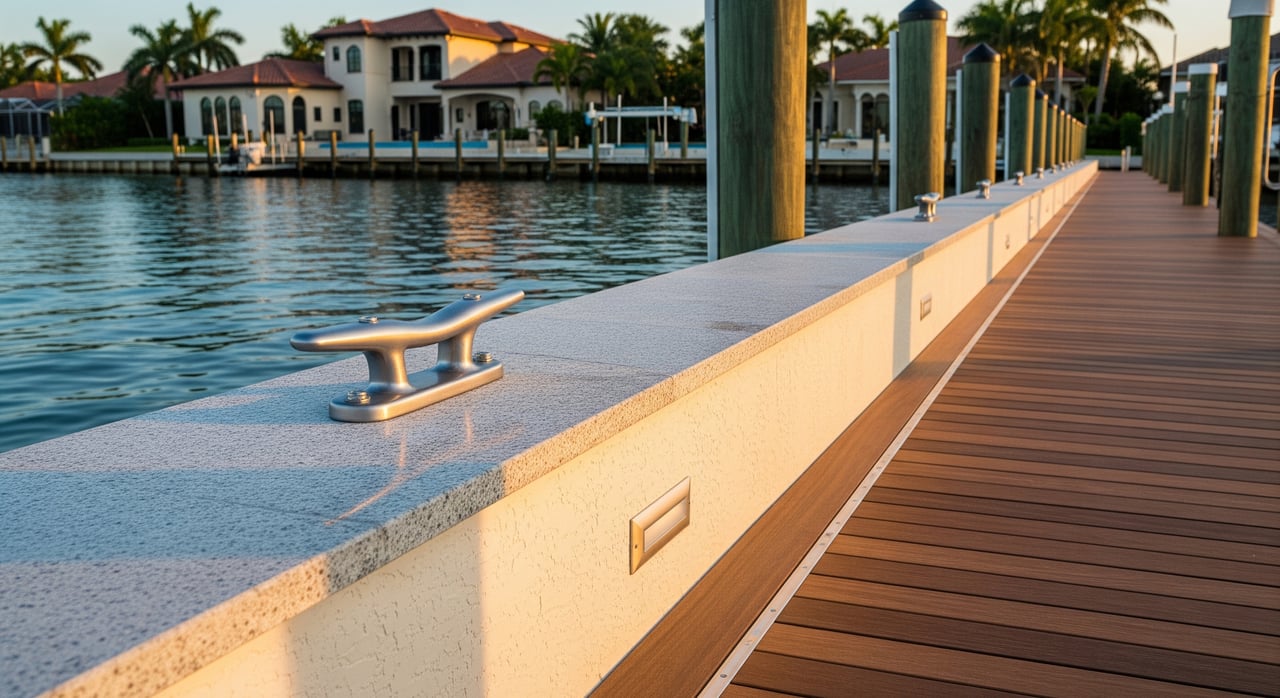
Docks and pilings
- Piles: soft spots, hollow sounds, rot, or marine borer damage in wood. Check for loose helical anchors.
- Decking: spongy or broken boards; heavily corroded fasteners.
- Connections: loose bolts, rusted hangers, or missing hardware.
- Floatation systems: cracked or water-logged floats, poor attachment methods.
- Mooring gear: worn cleats or bumpers in the wrong spots.
Boat lifts and power
- Frame: corrosion, pitting, or weld issues.
- Cables or straps: frayed cables, UV-damaged straps, missing safety stops.
- Motors and controls: visible corrosion, age, and maintenance labels. Look for GFCI-protected outlets.
- Documentation: capacity rating plate and any service records.
Red flags that need an engineer now
- Visible undermining or scour at the seawall toe or around piles
- Exposed and corroded reinforcing steel
- Noticeable lean, bulging panels, or gaps between panels
- Cosmetic patches with no records of structural repairs
- Adjacent properties with recent full replacements that hint at regional erosion
- Prior washouts or a permit or violation history that repeats
If you see any of these, plan for a pre-purchase marine structural inspection by a Florida-licensed engineer.
Which inspections you need
A general home inspection is not enough for marine structures. Bring in the right specialists.
- Licensed Florida Professional Engineer with coastal or marine experience: performs the seawall, dock, and structural assessment, estimates remaining service life, and prioritizes repair options. Verify licenses through the State of Florida database at MyFloridaLicense.
- Marine electrician: evaluates boat lift wiring and shore power for code compliance, including GFCI and bonding/grounding.
- Certified marine surveyor (optional): useful for large or complex lifts and docking hardware.
Your engineer’s report should cover age and materials, visible distress, toe and backfill conditions, anchors and tiebacks, and a ranked plan for monitor vs repair vs replacement. It should include permitting notes and a cost range. If soil or toe issues are suspected, the engineer may recommend a geotechnical evaluation.
Many experts suggest a detailed inspection every 3 to 5 years and after major storms. For a purchase, always include the inspection as a contract contingency.
Permits and records to request in Collier County
Marine work in Naples touches multiple agencies. Reviewing past permits and approvals can reveal what was done, who did it, and whether it was inspected.
- Collier County Building and Permitting Division: local permits for seawalls, docks, lifts, tree removal, and site access. Ask the listing agent for the property’s permit history or search county records via the Collier County Building and Permitting Division.
- Florida Department of Environmental Protection: state-level authorization for work seaward of mean high water and coastal construction controls. Learn about requirements at the Florida DEP website.
- U.S. Army Corps of Engineers, Jacksonville District: federal permits may be required for work in navigable waters or any dredge or fill activity. See the USACE Jacksonville District for program details.
- FEMA and Flood Insurance: check the Flood Insurance Rate Maps to verify your flood zone and Base Flood Elevation. Request any existing elevation certificate. Use the FEMA Map Service Center to review maps.
- Tidal datums and Mean High Water: for context on water levels and riparian limits, consult NOAA Tides and Currents.
Ask the seller for as-built or engineered drawings, final inspection letters, inspection reports, repair invoices, insurance claim records, the survey and plat showing the bulkhead line, any HOA or canal district documents, and the elevation certificate if available.
Ownership, easements, and maintenance duties
Waterfront properties can involve riparian rights, shared seawalls, and canal maintenance rules. Your title and survey review should confirm property lines, bulkhead lines, and any public or utility easements. Some canals are maintained privately or by HOAs, while others may be county-managed. Clarify who handles dredging, seawall upkeep, and cost-sharing so you understand obligations before you close.
Insurance, financing, and timing
Flood insurance may be required depending on your flood zone. Many standard homeowners policies limit or exclude gradual deterioration to seawalls and docks. Windstorm events may be handled differently by insurers. Ask for prior insurance claim history on marine structures and speak with an insurance professional about coverage impacts.
Serious seawall or dock damage can affect financing because lenders want the property to be habitable and insurable. If an inspection finds significant issues, consider these approaches during negotiations:
- Seller pays for repairs to an engineer’s standard with permits and final approvals before closing.
- A credit or repair funds held in escrow so you complete work after closing.
- Extended timelines to allow for engineering and permitting when required.
Consider adding simple contingency language such as: “Purchase is contingent upon buyer’s receipt and approval of a marine structural inspection by a Florida-licensed professional engineer within X days.” Work with your attorney and agent to tailor the final contract language.
Common repair paths and how to decide
Your engineer will recommend the most appropriate approach based on site conditions.
- Localized patching or toe repair: short-term option for minor spalls or limited corrosion if the toe and anchors are sound.
- Panel-by-panel replacement: a potential solution when isolated panels have failed but neighbors are serviceable. Access and staging in tight canals can be complex.
- Full replacement: the right call for widespread deterioration, anchor failures, or undermined toes. Design should consider sea level rise, storm surge, and scour.
- Tieback or anchor replacement: added stabilization for leaning walls. Requires geotechnical input and careful planning.
- Alternative stabilization: methods like jet-grouting or composite systems may fit specific subsurface conditions. Your engineer will advise if appropriate.
Buyer action plan: from tour to closing
Use this step-by-step list to keep your due diligence on track.
- At the showing
- Walk the wall line and dock. Note any leaning panels, toe exposure, spalling, soft decking, or corroded hardware.
- Check lift condition, cables or straps, and power. Look for GFCI protection at outlets.
- Before you write the offer
- Ask the listing agent for permit history, engineering reports, repair invoices, service records, and the survey and plat.
- Confirm HOA or canal district rules and any shared maintenance duties.
- Review flood zone and request any elevation certificate on file.
- In your inspection window
- Hire a Florida-licensed engineer with coastal experience and a marine electrician. Consider a marine surveyor for complex lifts.
- Request a written report with photos, urgency rankings, and cost ranges. If soil issues are suspected, add a geotechnical evaluation.
- Negotiation options
- Seek seller-funded, permitted repairs to defined standards, or negotiate a credit or escrow.
- Build in time for permitting if major work is likely.
- After closing
- Schedule routine inspections every 3 to 5 years and after major storms.
- Keep records organized: permits, approvals, invoices, and service logs help future resale.
Long-term resilience in Naples
Shorelines evolve with tides, storms, and sea level trends. When you repair or replace, ask your engineer about higher freeboard, robust toe protection, and materials that handle local exposure. Consider how regional dredging or channel projects might change loads on your wall in the future. Good planning today can save cost and disruption later.
A well-documented, well-maintained seawall and dock set you up for smooth ownership and a better resale story. If you want to explore properties where the marine structures support your boating plans and long-term value, get guidance from a professional who understands both construction and the local market.
Ready to evaluate Naples waterfront options with confidence? Connect with Jonathan Gunger for builder-level insight on structures, permits, and value so you can move forward with clarity.
FAQs
Do Naples waterfront buyers need a separate marine inspection?
- Yes. Get a pre-purchase marine structural inspection by a Florida-licensed professional engineer with coastal experience; a general home inspection is not sufficient.
How do I check Collier County permits on a seawall or dock?
- Ask the listing agent for the property’s permit history and final approvals, and review local records through the Collier County Building and Permitting Division.
Which agencies might regulate dock or seawall work in Naples?
- Local permits run through Collier County, state coastal authorization through the Florida DEP, and federal permits through the USACE Jacksonville District if navigable waters are affected.
How do flood zones affect buying on a canal or bay?
- Check your zone and Base Flood Elevation using the FEMA Map Service Center; flood insurance may be required and can impact costs and lending.
What seawall issues are most urgent during due diligence?
- Toe undermining, panel rotation or bulging, exposed corroded rebar, and repeated cosmetic patching without structural repairs require immediate engineer evaluation.