Buying a waterfront tear-down lot in Naples can feel like a shortcut to your dream build, but the wrong parcel can turn into months of delay, redesign, and added cost. If you are looking at canal-front, bayfront, Gulf-front, or other waterfront sites, you need more than a beautiful view and a rough building idea. You need to know how jurisdiction, floodplain rules, dock rights, seawall condition, and permitting paths affect what you can actually build. Let’s dive in.
Start With Jurisdiction First
One of the biggest early mistakes buyers make is assuming Naples waterfront rules apply the same way everywhere. They do not. Some lots fall within the City of Naples, while others are in unincorporated Collier County, and that difference can shape everything from setbacks to dock approvals.
The City of Naples Planning Department requires a pre-application meeting to help determine the right development review path. In unincorporated areas, Collier County Zoning Services handles items such as boat dock extensions, variances, rezones, and other land-use changes. Before you price a demo and new build, confirm exactly which jurisdiction controls the parcel.
Why the Review Path Matters
A waterfront tear-down rarely depends on the building permit alone. In many cases, the bigger issue is whether the lot needs a separate land-use review for a dock extension, boathouse, seawall work, or another waterfront improvement that falls outside a standard home build.
That is why your diligence should begin with the parcel map, the legal description, and the local review path. If you skip that step, you may spend time evaluating plans that do not fit the governing rules.
Confirm Flood Zone and Survey Data
On a waterfront lot, a current survey is not optional. It is one of the most important documents in your due diligence file because it helps confirm boundaries, shoreline conditions, and the reference points that affect setbacks and marine improvements.
The City of Naples says its 2024 Flood Insurance Rate Maps are in effect and recommends official confirmation through the Floodplain Coordinator or a licensed engineer, architect, or surveyor before purchase or construction. Collier County also reviews development in Special Flood Hazard Areas for floodplain compliance, which means flood status can directly affect design and cost.
Floodplain Rules Can Change Build Economics
If a lot is in a Special Flood Hazard Area, elevation and compliance requirements may materially affect your budget. Collier County notes in its flood protection guidance that the 50% rule can push an improvement or repair into current elevation compliance.
For teardown situations, that matters because what looks like a simple redevelopment opportunity may actually require more extensive floodplain planning than expected. Naples also requires an elevation certificate or FEMA form for permitted work in the SFHA, so this should be reviewed early, not after you close.
Check Whether the Lot Is Seaward of the CCCL
Not all waterfront lots follow the same permit path. Gulf-front and other parcels located seaward of the Coastal Construction Control Line come with an added layer of review.
According to the City of Naples, if a property is seaward of the CCCL, new construction, excavation, fill placement, shoreline-protection repair, and related work require a Coastal Construction Setback Permit in addition to the building permit. If you are evaluating a beachfront tear-down, this is one of the first items to confirm.
Review Zoning and Waterfront Setbacks
Zoning on Naples waterfront lots can be highly specific, especially when docks, piers, and lifts are involved. You should never assume an older dock layout or prior improvement sets the standard for future redevelopment.
In the City of Naples R1-15A district, for example, piers are allowed only on developed waterfront residential properties. They cannot be covered, must remain 20 feet from side property and riparian lines, and generally cannot extend more than 22 feet waterward of the toe of the riprap revetment. The city also treats boat lifts like piers, and the combined dock, moored vessel, and boat-lift arrangement cannot exceed 25% of the adjacent waterway width, based on the city’s waterfront code standards.
Do Not Assume the Existing Dock Stays
This is one of the most important points for buyers of tear-down lots. An existing dock, lift, or other marine feature may not survive redevelopment in its current form.
City and county materials make clear that changes are reviewed under current rules, and additions to nonconforming structures generally must comply with current standards. In plain terms, the dock you see today may not be the dock you can keep tomorrow.
Understand Dock and Lift Constraints in Collier
If your lot is in unincorporated Collier County, marine improvements have their own documentation and review standards. The county’s marine permit requirements call for a signed-and-sealed site plan showing the proposed dock, seawall, or boat lift, along with canal width if applicable and measurements of protrusions from the most restrictive feature.
For dock extension or boathouse petitions, the county may also require a signed and sealed survey, chart of the site waterway, cross-sections, and a narrative explaining how the proposal fits navigation, depth, and habitat constraints. That is why lot feasibility is often more about geometry and permitting than simple frontage.
Where Measurements Often Start
A detail that surprises many buyers is where setbacks are measured from. Collier County staff clarification says dock setbacks and protrusions are measured from the outer water side of the seawall or seawall cap.
That measurement point can affect whether a proposed lift or dock extension fits within the allowable envelope. On narrow canals, a few feet can make a major difference.
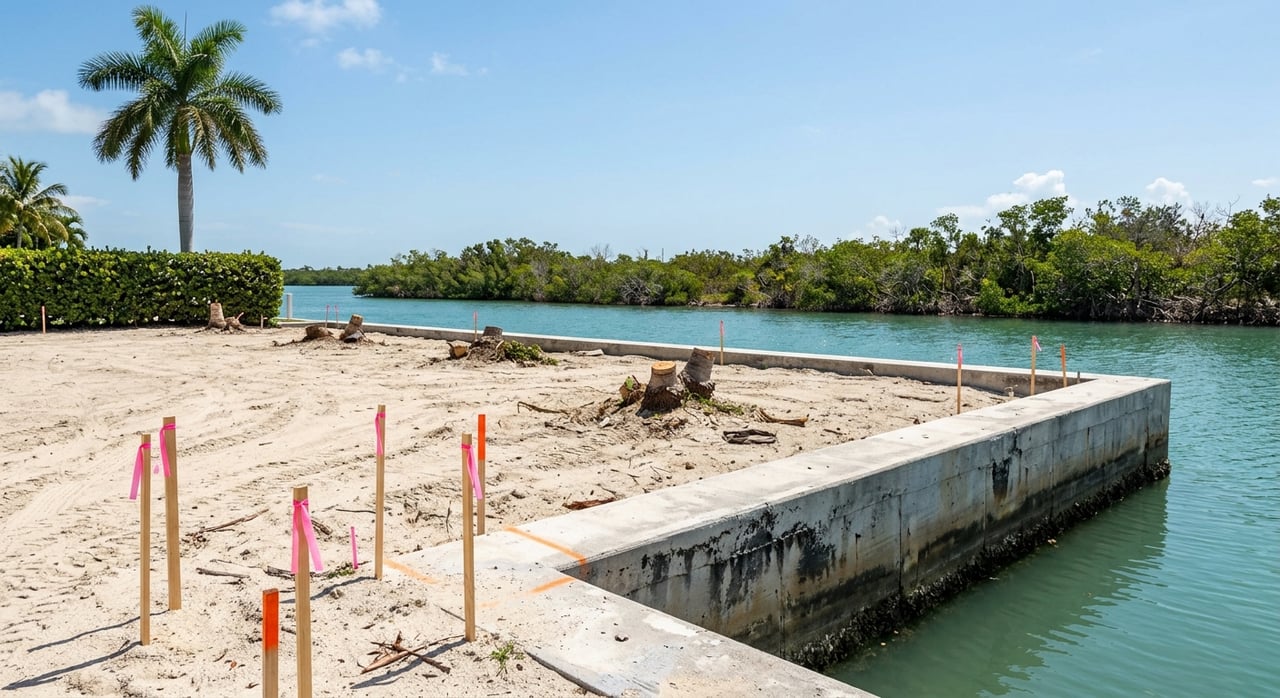
Evaluate Seawall Condition Early
Seawall condition is not just a maintenance question. It can become a pricing, permitting, and underwriting issue.
Naples waterfront rules call for environmental review of proposed piers and docks, and the city notes that seawalls and recessed boat slips are generally restricted in the R1-15A district. If work goes beyond the existing shoreline or riprap, it can become a dredge-and-fill issue that may trigger city, Florida Department of Environmental Protection, and U.S. Army Corps of Engineers review under the city’s waterfront regulations.
Collier County also warns in its seawall, rip rap, and boat dock guidance that USACE and FDEP permits are often needed before the county issues permits for seawalls, rip rap, and docks. If the property affects mangroves, seagrasses, or navigation, additional consultation may be required.
Factor in Soil, Drainage, and Site Prep
A waterfront tear-down lot is not only about what you can build above grade. It is also about what the site needs below grade to support that build.
Collier County requires stormwater plans for many single-family, two-family, and duplex lots unless an exception applies. The county also states that a signed-and-sealed compaction report is required before a certificate of occupancy, which is a useful reminder that soil performance, fill, drainage, and settlement are real cost variables on coastal lots.
Why This Matters on a Tear-Down Parcel
On paper, two lots may appear similar in size and location. In practice, one may require more site work, more engineering input, or more marine coordination because of settlement concerns, drainage design, fill needs, or seawall reconstruction.
That is where construction-minded due diligence can save you from overpaying for a lot that looks straightforward but is not.
Review Permit History and Demolition Rules
Before you close on a tear-down property, review the permit history. This can help you confirm whether the prior improvements were legally permitted and whether there are clues about past repairs, shoreline work, or unresolved issues.
Collier County states that a demolition permit is required to demolish buildings or structures. The county’s impact-fee guidance also notes there is no time limit to rebuild if the prior home was legally permitted and the original impact fees were paid, which can matter when you are evaluating redevelopment costs.
Set Realistic Expectations for Permitting Timelines
Buyers often ask how long permits will take. The honest answer is that timelines depend on more than the house plans.
Both Naples and Collier use electronic permit portals. Collier says portal document processing typically takes 24 to 48 hours, while Naples requires building permit applications to be entered electronically through its public portal. Florida law also sets defined review windows after a complete application is submitted, including timelines for missing-information notices and single-family permit review under state statute.
The Bigger Timeline Risk
For most waterfront tear-downs, the real wildcard is not the base building permit. It is the extra entitlement stack around floodplain review, dock and seawall approvals, survey accuracy, and whether your plans trigger a separate land-use petition.
That is why the best waterfront lot purchases start with technical feasibility, not just design inspiration.
A Smart Due Diligence Checklist
If you are evaluating a Naples waterfront tear-down lot, focus on these questions early:
- Is the parcel in the City of Naples or unincorporated Collier County?
- Do you have a current survey and confirmed flood-zone information?
- Is the property in a Special Flood Hazard Area?
- Is the lot seaward of the Coastal Construction Control Line?
- What zoning district applies, and what does it allow for docks and lifts?
- Can the existing dock, lift, or seawall remain under current rules?
- What is the canal or waterway width, and how does that affect protrusions?
- Does the seawall show signs of repair, movement, or likely replacement?
- Will stormwater, compaction, or fill requirements affect cost?
- Does permit history support a smooth demolition and rebuild path?
Why Technical Guidance Matters
A waterfront lot can be a strong long-term opportunity, but only if the site supports your goals. In Naples and Collier County, the difference between a workable lot and a costly one often comes down to details that are easy to miss during a standard property tour.
That is where contractor-level review adds real value. When you can evaluate zoning, floodplain exposure, dock constraints, seawall condition, and likely permitting hurdles before you commit, you put yourself in a much stronger position to negotiate and plan.
If you are considering a waterfront tear-down lot in Naples or anywhere in Collier County, Jonathan Gunger can help you evaluate the real-world feasibility behind the view, with practical insight grounded in waterfront real estate, construction, and permitting.
FAQs
What should you verify first on a Naples waterfront tear-down lot?
- First, confirm whether the parcel is in the City of Naples or unincorporated Collier County, because that determines which zoning rules, dock standards, and review processes apply.
Does an existing dock automatically stay with a waterfront rebuild in Naples?
- No. City and county materials indicate dock, lift, and seawall changes are reviewed under current rules, and nonconforming structures generally must comply with present standards if modified.
How do flood zones affect a Naples waterfront new build?
- Flood zones can affect elevation requirements, permit documentation, and overall build cost, especially if the lot is in a Special Flood Hazard Area or subject to the 50% rule.
When does a beachfront lot in Naples need extra permits?
- If the property is seaward of the Coastal Construction Control Line, the City of Naples requires a Coastal Construction Setback Permit in addition to the building permit.
Where are dock setbacks measured from in Collier County?
- Collier County staff guidance says dock setbacks and protrusions are measured from the outer water side of the seawall or seawall cap.
Why is seawall condition so important on a Naples tear-down lot?
- Seawall condition can affect underwriting, engineering scope, permit requirements, and total redevelopment cost, especially if repairs or replacement trigger additional environmental or agency review.