If you are planning to renovate a property on Fort Myers Beach, the FEMA 50 percent rule can change your budget, timeline, and even what kind of project is possible. That can feel like a lot to sort through, especially if you are weighing a remodel, post-storm repairs, or a pre-listing update. The good news is that once you understand how Fort Myers Beach applies the rule, you can make better decisions before plans and costs start to snowball. Let’s dive in.
Why the 50 percent rule matters
On Fort Myers Beach, floodplain compliance is part of everyday renovation planning because Estero Island is entirely within the special flood hazard area. The Town enforces the 50 percent rule during plan review, so this is not something that shows up only after construction is underway.
In simple terms, the rule is triggered when the cost of work equals or exceeds 50 percent of the market value of the structure only, not the land. The Town notes that this often affects older homes, especially those built before current flood maps or to outdated standards.
That distinction matters if you are buying, selling, or holding a property for renovation. A project that looks straightforward at first can quickly become an elevation or rebuild decision once the numbers are reviewed.
How Fort Myers Beach calculates it
The Town uses the value of the structure alone as the baseline. That means land value and other non-structure items are excluded from the calculation.
You can usually use the Lee County Property Appraiser’s structure value or a private actual cash value appraisal prepared by a Florida-licensed appraiser. If a Tax Roll Value Letter is not available for the parcel, the Town says a private appraisal may be required.
On the cost side, Fort Myers Beach takes a broad view of what counts. The estimate must include labor and materials, and even discounted or donated materials and owner or volunteer labor must be assigned market value.
The Town also says certain items owners sometimes assume are minor still count in the total. That includes impact windows, doors, shutters, built-in cabinets, and built-in appliances.
What may be excluded
Not every property expense is automatically part of the 50 percent calculation. The Town says accessory structures such as fences, driveways, and garages are excluded from a substantial damage determination, and some items not directly associated with the primary building may also be excluded from the repair and improvement cost form.
That said, this is one area where details matter. If you are assembling a renovation budget, it is smart to confirm exactly what the Town will include before relying on a rough estimate.
Prior permits can complicate the math
One of the most important gray areas involves prior work. The Town’s main substantial improvement and substantial damage page says the calculation includes permits obtained in the past five years, but a separate Town FAQ says a roof replacement completed before Hurricane Ian would not count toward a later storm-damage calculation for that event.
The practical takeaway is simple: do not assume your earlier work is automatically included or automatically excluded. Before you finalize a contractor agreement or renovation scope, confirm with Building Services how prior permitted work will be treated for your property.
What happens if you stay under 50 percent
If your project remains below the threshold, the Town says the existing structure can generally be repaired in place without elevation, as long as it was originally permitted and code-compliant in the flood zone. For many owners, that can preserve a more manageable renovation path.
This is why accurate early budgeting matters so much. If you are close to the line, small scope changes can affect whether the project stays a repair-in-place renovation or shifts into a much more complex compliance process.
What happens if you cross 50 percent
If the project reaches or exceeds the threshold, Fort Myers Beach treats it like new construction for floodplain compliance. That changes the rules in a major way.
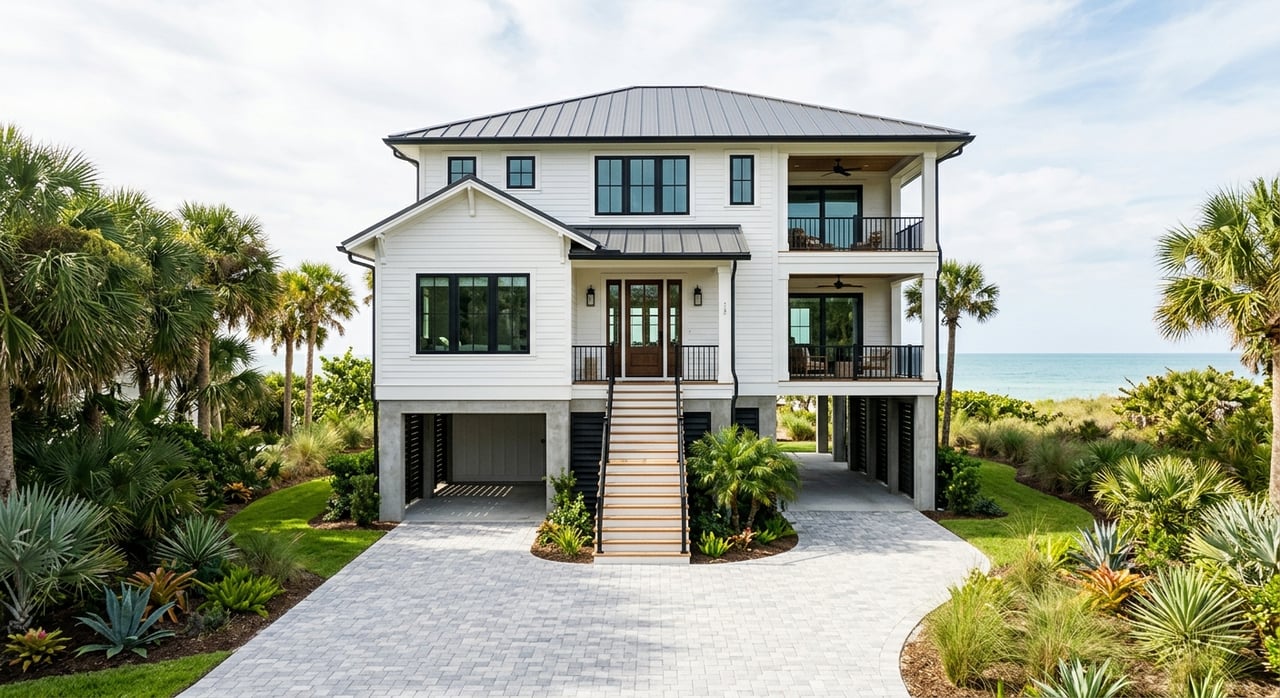
For residential properties, the lowest floor must be elevated to the required flood protection level unless the building is already above it. In Fort Myers Beach, that required level is the Base Flood Elevation plus one foot of freeboard.
If the building and its utilities are already above that level, the Town says additional elevation is not required. But if they are not, the renovation can become a significantly larger structural and financial decision.
Residential and nonresidential properties differ
For residential buildings, floodproofing below the Base Flood Elevation is not an alternative to elevation. The Town’s guidance makes clear that residential structures must be elevated when substantial improvement rules apply.
For some nonresidential buildings, floodproofing may be an option. That distinction is important for investors or owners evaluating mixed-use or commercial property on or near Fort Myers Beach.
Why this matters for buyers, sellers, and investors
The FEMA 50 percent rule is not just a construction issue. It can directly affect property value strategy, negotiation leverage, and whether a deal makes sense in the first place.
If you are a buyer, the rule can shape whether a home is a practical remodel candidate or better suited for elevation or full rebuild planning. If you are a seller, it can influence how you position the property, what work makes sense before listing, and how confidently you can answer renovation questions from serious buyers.
For investors, the rule can affect carrying costs, permit timing, and total project feasibility. A property that appears to support a cosmetic rehab may actually require a much deeper capital plan once floodplain compliance is factored in.
Permits and timing in Fort Myers Beach
The Town requires a substantial improvement application and permit review before work begins. Starting construction without an issued permit can lead to citations and fines, so early planning is essential.
Fort Myers Beach also states that Building Services uses a private provider for floodplain reviews, building code plan review, and inspections. Because of that, timing can vary depending on the project scope and whether resubmittals are needed.
The Town says demolition, roofing, and over-the-counter trade permits are generally processed within hours. New single-family and commercial projects typically take about 10 to 15 business days for review.
That timing can have real financial impact. If you are pre-listing a home, under contract on a value-add purchase, or comparing rehab versus teardown options, even a short review window can affect scheduling, carrying costs, and deal structure.
Smart due diligence before you renovate
Before you commit to a major renovation on Fort Myers Beach, a few steps can help you avoid expensive surprises.
1. Confirm the property’s jurisdiction
Some properties with a Fort Myers Beach mailing address are actually in unincorporated Lee County. In those cases, permits would go through the county rather than the Town.
That is a critical first check because the review path needs to match the actual jurisdiction. If you are buying or planning work remotely, this is especially easy to overlook.
2. Get a structure-only valuation
Because the 50 percent rule is based on the value of the structure alone, this number needs to be accurate. Depending on the parcel, that may mean using the Lee County Property Appraiser’s structure value or ordering a private appraisal.
A land-inclusive value will not give you the right baseline for the Town’s review. If the valuation is wrong at the start, every renovation estimate built around it can be misleading.
3. Price the work realistically
Fort Myers Beach requires labor and materials to be counted at market value, even if labor is owner-provided or materials are discounted. That means a low informal estimate may not hold up during review.
If you are close to the threshold, detailed scope planning is worth the effort. It is much better to understand your true number early than to redesign a project after permit review begins.
4. Check for an elevation certificate
Before a major renovation, the Town says you should verify the home’s elevation with an elevation certificate if one exists. The Town has only a limited number on file, and if none is available, a Florida-licensed surveyor must prepare one.
That document can help clarify whether the building may already meet the required flood protection level. In some cases, that can materially change the renovation strategy.
5. Talk with the Town early
Fort Myers Beach encourages owners and contractors to discuss proposed work with Community Development staff early in the process. That is practical advice, especially when the project scope is near the 50 percent threshold or prior permits may affect the calculation.
An early SI/SD review can help you decide whether the property is best approached as a remodel, an elevation project, or a full rebuild. That kind of clarity can save time, money, and negotiation friction.
A practical way to approach renovation decisions
On Fort Myers Beach, the FEMA 50 percent rule is not just a technical code issue. It can determine what you are allowed to build, how long approvals may take, and whether a property makes more sense as a renovation or a redevelopment opportunity.
That is why renovation planning should start with facts, not assumptions. When you confirm jurisdiction, establish a structure-only value, build a realistic cost estimate, and review floodplain compliance early, you put yourself in a far stronger position to move forward with confidence.
If you are buying, selling, or evaluating a waterfront property where renovation scope and permitting risk could affect the deal, working with someone who understands both the market and the construction side can make the process much clearer. Jonathan Gunger brings contractor-level insight to coastal real estate decisions across Lee and Collier County, helping you evaluate renovation potential, permitting risk, and the smartest path forward.
FAQs
What is the FEMA 50 percent rule for Fort Myers Beach renovations?
- On Fort Myers Beach, the rule is triggered when the cost of repair or improvement equals or exceeds 50 percent of the market value of the structure only, excluding land.
What costs count toward the 50 percent rule in Fort Myers Beach?
- The Town says labor and materials count, including market value for donated or discounted materials and owner or volunteer labor, plus items like impact windows, doors, shutters, built-in cabinets, and built-in appliances.
What happens if a Fort Myers Beach home renovation exceeds 50 percent?
- If the project crosses the threshold, it is generally treated like new construction for floodplain compliance, and residential buildings must be elevated to the required flood protection level unless they are already above it.
What is the required flood protection level in Fort Myers Beach?
- The Town identifies the required level as the Base Flood Elevation plus one foot of freeboard.
Do garages, fences, and driveways count in a Fort Myers Beach 50 percent calculation?
- The Town says accessory structures such as fences, driveways, and garages are excluded from a substantial damage determination, and some items not directly tied to the primary building may also be excluded.
Can you start renovation work before the permit is issued in Fort Myers Beach?
- No. The Town requires permit review before work starts and warns that beginning construction without an issued permit can lead to citations and fines.
How long do permits take in Fort Myers Beach for renovation projects?
- The Town says demolition, roofing, and over-the-counter trade permits are generally processed within hours, while new single-family and commercial reviews typically take about 10 to 15 business days.
What should you verify before renovating a property with a Fort Myers Beach mailing address?
- You should confirm whether the property is actually within the Town of Fort Myers Beach or in unincorporated Lee County, because permitting authority may differ.